Seasonal Bunting Guide: Spring, Summer, Fall, and Winter Color Palettes
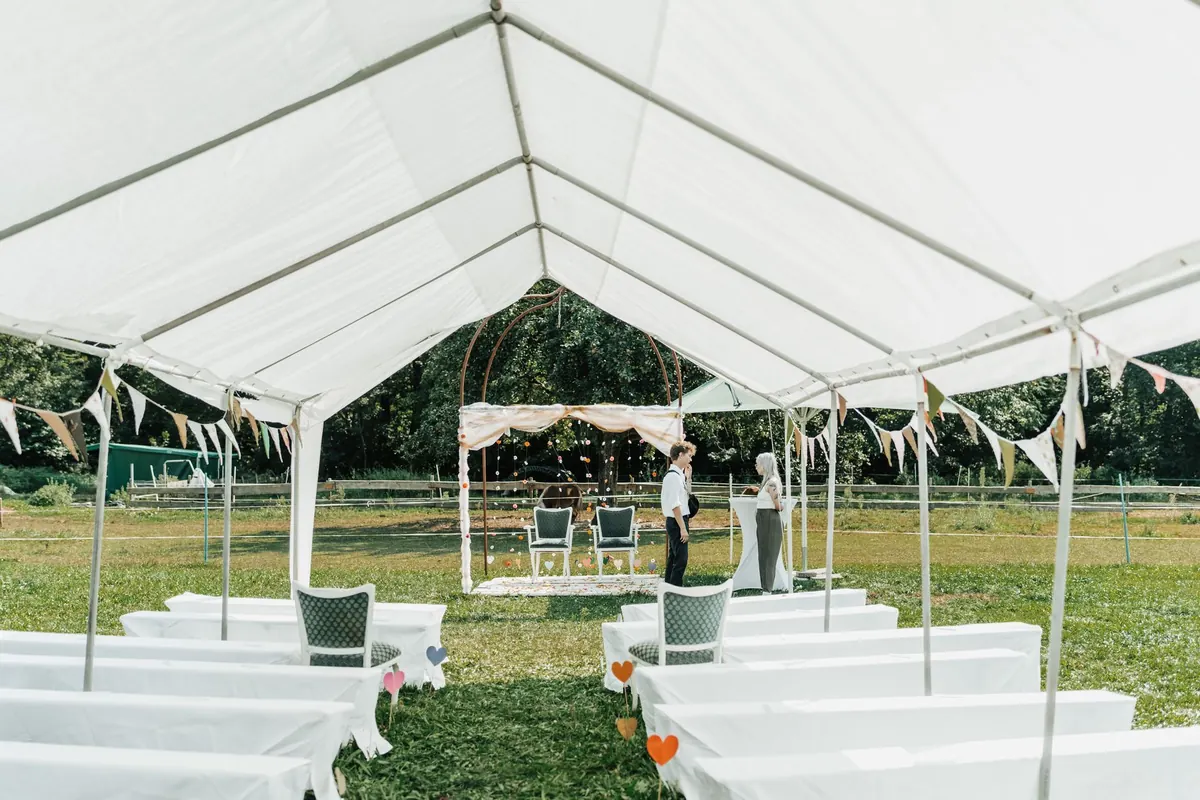
Seasonal bunting does two jobs at once. It sets a mood the moment guests walk through the door, and — if it's hanging outside — it has to survive whatever the weather decides to do. A cotton pennant strung across a July patio will look tired by August. That same cotton in a March dining room, lit by a window, looks exactly right. Choose the fabric for the conditions first, then let the palette carry the season.
Start With Weather, Then Pick the Palette
Where the bunting hangs matters more than which colors you love. Indoors, almost anything works: felt, satin, quilting cotton, even good paper for a one-day party. Outdoors, the fabric is doing the heavy lifting and the palette is decoration on top.
Three quick checks before you commit to a fabric:
- Hold it up to light. Thin cotton goes translucent in direct sun and the color looks washed out from below. A poly-cotton or coated fabric keeps its density.
- Test it with water. A few drops from a glass will tell you whether a fabric spots, sags, or dries quickly.
- Weigh it in your hand. Light fabric flutters and twists in a breeze; heavier fabric hangs straight and reads as a clean line.
Watch the span, too. A strand longer than about ten feet with no midpoint support will sag in the middle. Add a hook and a length of twine at the center, or break the run into two shorter swags. It looks intentional and it holds its shape.
Spring: Soft Color, Light Fabric, a Little Rain
Spring palettes work best when they look slightly understated: blush, butter yellow, mint, lilac, robin's egg blue, and plenty of soft white. Add one deeper tone — sage, dusty rose, or a quiet navy — as an anchor so the pastels don't disappear in photos taken in bright daylight.
Cotton and cotton blends, light linen, and indoor felt all suit the season's lighter mood. Motifs that read as spring include scalloped edges, small scattered blossoms, raindrops, eggs, and gingham. Keep the prints small; oversized patterns fight with pastel colors.
If the party is outdoors, plan for showers. A poly-cotton blend or a spray-on water repellent (test it on a scrap first) saves you a last-minute panic. Skip heavy velvet — it looks like the wrong season entirely.
Summer: Bright, Bold, and Built for Sun
Summer is the one season that rewards saturation. Coral, watermelon pink, turquoise, lemon, and classic navy-and-white stripes all hold up against green grass and strong afternoon light. Mottled tones get lost outdoors, so commit to clear color.
Fabric matters most here. Solution-dyed polyester, ripstop nylon, and marine-grade canvas are made for sun and splash. Before you cut a full set, hang a test swatch outside for a week. Deep reds and purples tend to shift first, and you'd rather find out with one square than with twenty feet of it.
Wind is the other summer problem. Shorter pennants — six to eight inches — flap less and tangle less than long triangles. Use a wide ribbon tape across the top, double-stitch the seam, and tie the strand off every couple of feet so a single snapped line doesn't drop the whole run.
Fall: Warm Tones and Textures You Can Feel
Fall bunting is less about brightness and more about depth. Rust, pumpkin, mustard, olive, plum, deep teal, and oatmeal or cream give you a palette that photographs warmly and works indoors and out.
This is the season for burlap, duck canvas, flannel, felt, and heavier cotton. They hang with weight, which suits a porch railing or a barn wall. A word of caution on burlap: it sheds, holds a faint smell, and frays. Line it with a cotton backing or choose a coated jute-look fabric, and finish raw edges with pinking shears or a fray-check product.
Layering is what makes fall bunting look considered. Hang two strands at different heights — a wide burlap pennant behind, a narrower plaid one in front — and let the bottom edge fall at a slight angle rather than perfectly level.
Winter: Deep Color and Rich Texture
Winter palettes split neatly in two directions. Classic holiday: evergreen, cranberry, midnight navy, antique silver, warm gold. Cool and quiet: icy blue, frost white, pale grey, and a touch of charcoal. Either way, contrast texture as well as color, pairing matte wool or felt with something that catches light, like satin ribbon or a metallic edge.
Velvet, wool blends, canvas, and heavy cotton suit the season. Snowflakes, stars, tartan, and scalloped velvet shapes all work. Because winter decorating often happens near lights and candles, keep fabric clear of open flames, hot bulbs, and space heaters — LED string lights stay cool and are the safer choice. For public venues, ask the venue about any flame-retardant requirements before you hang.
Matching Motifs and Shapes to the Season
- Spring: scalloped flags, blossom and raindrop shapes, small-scale florals, gingham
- Summer: classic triangles, stripes, citrus wedges, anchors, sunbursts
- Fall: leaf and acorn shapes, plaid, layered burlap and canvas, pointed pennants
- Winter: snowflakes, stars, tartan, velvet scallops, metallic trim
Whatever the season, hold to a simple ratio: three colors per strand, one pattern, one solid, one texture. Four or five tones competing along a single line rarely looks better than three that clearly belong together.
Make Once, Reuse Every Year
A little care at the end of the season means you don't start from scratch next year.
- Cut one test pennant and hang it for a day before cutting the rest.
- Finish all raw edges — hem, zigzag stitch, pinking shears, or fray check.
- Reinforce the top corners with a small square of fusible interfacing before stitching.
- Sew or clip pennants to a wide ribbon tape rather than threading them on string.
- Label each set with the fabric, colorway, and total length, then store it in a breathable cotton bag.
Skip plastic bins for anything that was even slightly damp when it came down. Trapped moisture is what turns a favorite strand musty by the following year.
Build the Set One Season at a Time
Start with the season you host most often. Make or buy twelve to fifteen feet, hang it, and live with the colors for a few weeks before committing to a second strand. Next year, add the following season.
Over time, you'll notice the sets start to mix well. Oatmeal and cream from fall carry into winter. Mint from spring sits comfortably beside summer turquoise if you share the same navy accent. That overlap is the real payoff: four palettes, one storage shelf, and a house that changes with the calendar.
Photo: lucasgeorgewendt / Pixabay